
Here are 10 global and domestic factors.

BSE, the oldest stock exchange in Asia, aims to raise up to Rs 1,243 crore from the IPO, which has a price band of Rs 805-806 per share.

'When a new superhero film releases, China creates figurines based on the film and puts them out in the market along with the film's release.' 'Does our domestic manufacturing sector been able to do it so quickly? No.' 'We have a large millennial population and we have to make products that are more in line with the tastes of those people.' 'The MSME sector can win back its customers only this way.' 'When they change with the consumers's needs, there will be a move towards Indian products.'

The elections held in April-May 2019 will be an important determinant of future growth and investment.

Will demonetisation lead to a rate cut, leading to higher quantum of lending?

Rupee is seen to remain in the range of 67.50-68.80 in the short-term

The Street was following the Karnataka election closely as a test for the Modi-led BJP's prospects in the 2019 Lok Sabha poll. Investors, however, are likely to wait for the next round of state elections to judge whether the momentum is still with it.

Liquidity issues post the crisis at DHFL, progress of monsoon, rupee trajectory at the domestic level and oil prices are some factors that will keep markets choppy, analysts say.

FPIs are currently capped at 5 per cent of the total outstanding government dated securities, and own 4.5 per cent

Equity strategists are basing their expectation on strong corporate earnings recovery, supportive global economic growth, and gradual improvement in business sentiment.

Buy these stocks on any correction as both the companies have strong long-term prospects

There will be pressure on the fiscal situation, especially at a time when the monsoon can also disappoint. More populist expenditure is on cards if the mandate is a hung Parliament or a coalition government.

RBI's draft guidelines on computation of base rate, if implemented in its current form, will significantly impact the profitability of banks.
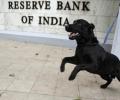
Growth impulses, while improving, remain fragile, and a rate hike will be disruptive to interest costs.

It expects the Indian market to grow to 10 million units annually by 2030 and it intends to control half the market then, like it does now.

Though most experts remain bullish on the banking space, they suggest investors buy only those banks whose NPAs are at a manageable level of 3% to 4% and there is credit growth or earnings visibility.

Brokerage firm CLSA says in its interactions with government officials, measures such as the dollar-deposit scheme were under consideration.

Despite a slowing economy, the Budget does not envisage any major stimulus through the budgeted fiscal deficit figures, said Goldman Sachs.

In dollar terms, the Indian markets managed to climb back to 2008 levels only in January this year. The subsequent fall in the rupee because of emerging market woes has once again pushed the markets below their 2008 level in dollar terms.

A below-normal monsoon is likely to drag down the food output with India's agricultural GDP growth likely to slump to 0.8 pc in the current fiscal, says a report by the Japanese brokerage firm Nomura.
The trade-war between the US and China is prompting investors to flee from risky assets, such as equities, to safe-haven bets, such as gold and treasuries
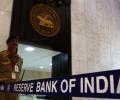
The new hire, Gangadhar Darbha, joined as a consultant

The minders of the Modi government's economic policy believe it would take 7 to 8 quarters -- or till around late 2018 -- for the economy to reap the rewards of demonetisation.

Leading brokerages Nomura and Barclays on said current account deficit, which unexpectedly improved to 4.8 per cent in 2012-13, but still at a historic high, could moderate further this fiscal on slowing gold imports and cheaper commodities.

Rate cuts are unlikely to be aggressive, in our view.

The problem for the NBFC sector is the funding inertia by banks and not lack of funds.

The Chinese currency too is expected to continue its fall.

The time is ripe for a merger of eight fund houses indirectly owned and controlled by the central government, says N Sundaresha Subramanian.

The combined market capitalisation of the 21 listed PSU banks declined by about Rs 76,000 crore to Rs 425,800 crore during the month.

One Rank One Pension (OROP) will have a significant impact on the country's fiscal bill and the overall cost will be around Rs 16,000 crore.

AAP has promised lower electricity bills, free basic water supply.

Between now and the general elections (likely in May 2019) there are 12 assembly polls, which analysts say, in a way will also be interpreted as a referendum on the Modi-led government's key reforms

Irrespective of demonetisation and GST blues, IIM Lucknow has been able to successfully place their batch of 459 students.

The good news for the group has come from the port business.

The RBI gauges both measures of inflation when deciding on monetary policy,
In the same quarter a year before, most of them had reported a dismal performance.
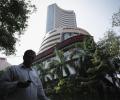
Offer size could vary from Rs 1,200 cr to Rs 2,000 cr

A strengthening dollar overseas also kept the rupee under pressure amid demand from importers. Goldman Sachs followed JP Morgan, HSBC and Nomura in cutting India's economic growth forecast and also said it expects the rupee to touch 72 against the dollar in the next six months.

'Both IIP and CPI inflation numbers are showing a huge disconnect from the leading indicators.'

The NSE Nifty after shuttling between 10,397.60 and 10,279.35 points, ended 47 points, or 0.45 per cent lower at 10,301.05.
